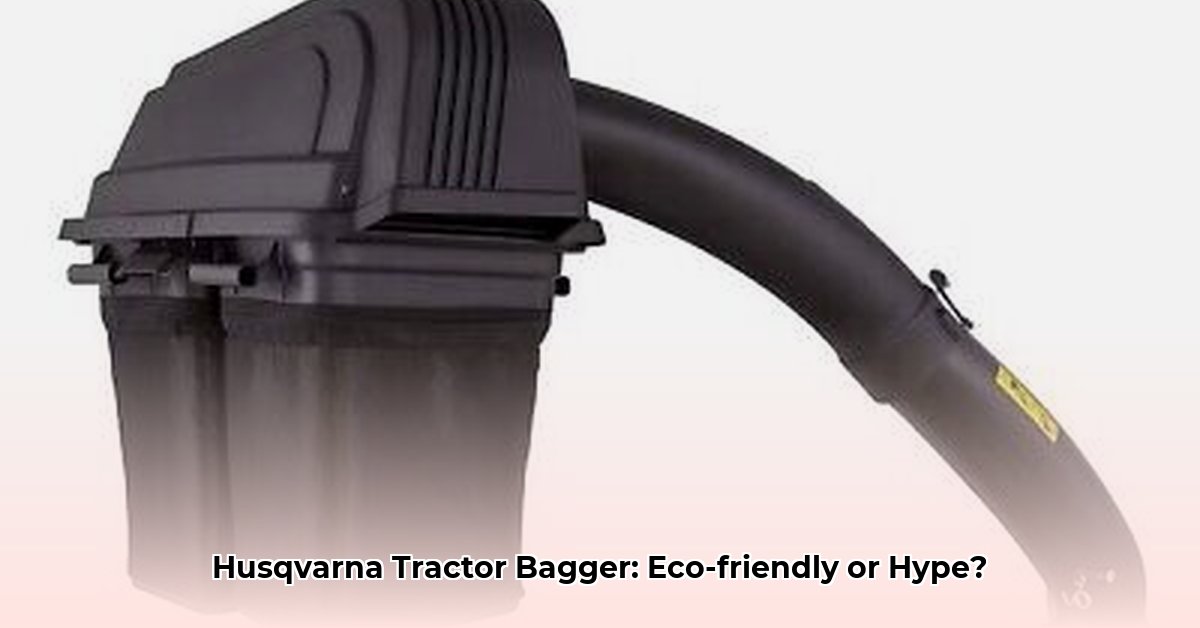
This review examines the Husqvarna tractor bagger, assessing its performance and durability while critically analyzing its environmental impact. We'll explore sustainable lawn care practices to minimize its footprint and offer actionable recommendations for eco-conscious homeowners. Lawn care and sustainability go hand-in-hand; let's see how this bagger fits the picture. For more information on tractor baggers, see this helpful resource.
Husqvarna Bagger Functionality: A Detailed Look
The Husqvarna tractor bagger boasts a high-capacity collection system, promising fewer trips to empty the bin—a significant advantage for larger yards. This can indirectly reduce fuel consumption by minimizing the number of mowing passes, potentially offsetting some environmental costs. However, emptying the full bagger requires considerable effort due to its weight. User reviews suggest a generally positive experience, although attaching the bagger to some older models can prove challenging.
Performance: Efficient collection, even in thick grass, is consistently praised. However, some older models report difficulties with proper attachment.
Ease of Use: Feedback is mixed. While emptying the bag is considered strenuous, most users find the overall operation straightforward.
Durability: The bagger demonstrates robust construction, promising longevity. However, exposure to the elements necessitates regular cleaning and storage for optimal lifespan. The long-term durability and recyclability of materials are key sustainability factors.
Maintenance: Regular cleaning and proper storage are crucial for maximizing the bagger's lifespan and mitigating potential damage.
The Environmental Impact: More Than Just Grass Clippings
The convenience of bagging grass clippings presents a significant environmental challenge. Disposing of these clippings in landfills contributes to methane emissions—a potent greenhouse gas far exceeding carbon dioxide's warming potential. This raises concerns about the overall sustainability of using such a bagger. But what are the alternatives?
Does the convenience outweigh the environmental cost? Research suggests that efficient collection might lead to fewer mower passes, but this potential benefit is overshadowed by the large quantities of waste sent to landfills. Furthermore, the bagger's manufacturing process consumes resources and energy, contributing to its carbon footprint. A complete lifecycle assessment (LCA) is needed for a thorough understanding of the environmental impact. We need to consider the entire production chain, from material sourcing to the final disposal and recyclability of the bagger.
Sustainable Lawn Care Practices: Minimizing Your Impact
Several strategies can mitigate the environmental impact of using a bagger:
Composting: Transforming grass clippings into nutrient-rich compost reduces landfill waste and provides a natural fertilizer for your garden. This practice is highly effective in reducing the environmental footprint. However, efficient composting requires managing carbon-to-nitrogen ratios, maintaining adequate moisture, and ensuring proper aeration.
Mulching: Mulching mowers finely chop grass clippings, returning them to the lawn as a natural fertilizer, eliminating the need for bagging altogether. Research indicates mulching can significantly enhance soil health and reduce the need for chemical fertilizers.
Creative Reuse: Grass clippings can be used as mulch around plants, or to enrich garden beds reducing the need for artificial soil amendments. This minimizes waste and contributes to a circular economy.
Reduced Lawn Size: Smaller lawns reduce mowing frequency, lessening the quantity of clippings generated, and ultimately minimizing environmental impact.
Actionable Steps Towards Greener Lawns
For Homeowners:
- Assess: Evaluate existing grass clipping disposal practices.
- Explore: Consider composting, mulching, or alternative uses for clippings. Composting offers a 95% reduction in landfill waste, while mulching eliminates bagging entirely.
- Upgrade: Investigate mulching mowers as an environmentally responsible alternative.
- Rethink: Evaluate the necessity of exceedingly large lawns.
For Manufacturers:
- Green Manufacturing: Implement processes to minimize greenhouse gas emissions during production.
- Sustainable Materials: Prioritize recycled and recyclable materials in bagger construction.
- Design for Recyclability: Design for easy disassembly and recycling at the end of the bagger's life.
For Researchers:
- Lifecycle Assessments: Conduct thorough LCAs of lawn care equipment to quantify their environmental effects.
- Best Practices: Develop and disseminate best practices for environmentally responsible lawn care.
Is the Husqvarna Bagger Eco-Friendly? The Verdict
The Husqvarna bagger's environmental impact isn't a simple "yes" or "no." The bagger itself is merely a tool; its environmental footprint depends entirely on how it's used. Coupled with sustainable practices like composting or mulching, the negative impact can be significantly mitigated. However, without these conscious choices, the additional landfill waste presents a considerable environmental concern. A responsible approach balances the convenience with the environmental consequences. The final decision requires careful consideration and a commitment to sustainable lawn care practices. Further research into alternative methods of waste management and environmentally friendly lawn care techniques are crucial for a truly sustainable future.